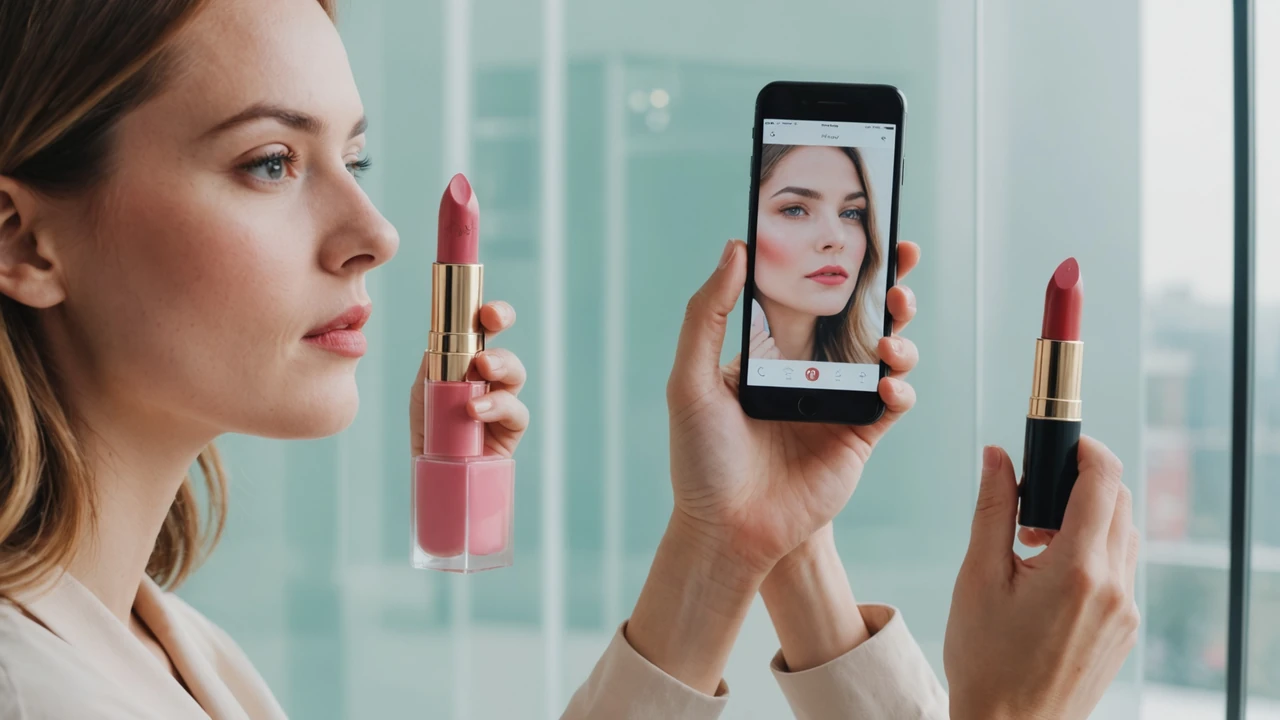
Returns in beauty ecommerce are treated as a cost of doing business. Most brands account for them in their fulfillment budgets, build them into their margin models, and move on. What's often missing from that accounting is how much of the return cost is actually preventable — and what it would cost to prevent it. We've spent time with those numbers. They're more uncomfortable than most P&Ls reflect.
The Baseline: What Returns Actually Cost Per Transaction
A beauty return isn't just the cost of shipping the product back. The full cost includes: outbound shipping on the original order, return shipping (or the margin sacrifice of not requiring returns for low-cost items), receiving and inspection labor, repackaging where the product is resalable, write-off cost where it isn't, and the customer service touch that usually precedes the return request.
For a DTC brand with reasonable logistics infrastructure, a single color cosmetics return typically costs $12 to $18 in total handling, before any consideration of the lost margin on the original sale. If the returned product can be restocked, the brand recovers the product cost but not the fulfillment cost. If it can't — opened lipsticks and foundations generally can't — the brand also writes off the cost of goods.
Industry-wide, shade-mismatch is the primary stated reason for color cosmetics returns in the US DTC channel, accounting for approximately 38% of all returns in the category. At $340 in annual return-logistics cost per active returning customer, a brand with 5,000 active annual buyers who return at the category average is absorbing roughly $1.7M in direct return costs annually — before the COGS write-off on non-resalable product.
Where the Returns Come From: Shade vs. Product Quality
Not all beauty returns are preventable through better visualization. Returns fall into a few distinct buckets, and it's worth separating them before making investment decisions.
| Return Reason | Est. % of Color Cosmetics Returns | Preventable via AR? |
|---|---|---|
| Shade mismatch (wrong color for skin tone) | ~38% | Yes — directly |
| Formula/texture disappointment (expected different feel) | ~22% | Partially — swipe tests help; AR doesn't |
| Damaged/defective product in transit | ~14% | No |
| Changed mind / impulse-purchase regret | ~18% | Possibly — better purchase confidence may reduce impulse |
| Wrong item shipped / fulfillment error | ~8% | No |
The 38% shade-mismatch bucket is the addressable target for AR investment. Some portion of the formula/texture and changed-mind returns may also be reduced through better pre-purchase visualization — a shopper who spent 90 seconds trying on a shade and confirmed it looked right on her face is less likely to have buyer's remorse than one who bought on a product photo. But the core case is the shade-mismatch number.
The Cost Model at Three Revenue Scales
To make the return cost tangible, here's how the math plays out at three common DTC revenue scales, assuming the category-average 38% shade-mismatch return rate and a $15 average handling cost per return:
- $2M annual color cosmetics revenue: At a typical $28 average order value, that's roughly 71,400 orders. A 38% return rate on shade mismatch across the catalog would imply approximately 5,400 returns annually, costing around $81,000 in direct handling — before COGS write-offs on non-resalable product.
- $5M annual: Approximately 178,500 orders. Same assumptions produce roughly 13,500 returns and $202,500 in handling costs annually.
- $15M annual: Roughly 535,700 orders, 40,500 shade-mismatch returns, and approximately $607,000 in direct return handling per year.
These are conservative estimates — they use a $15 handling cost rather than the higher end of the $12-18 range, and they don't include the COGS component for non-resalable product. In our experience, brands tend to underestimate return costs in their operating models because the costs are distributed across fulfillment, customer service, and COGS write-off lines rather than appearing as a single "returns" line item. Consolidating them into one view is usually clarifying.
Why "No Returns" Policies Don't Solve the Problem
Some brands have experimented with tightened return policies — shorter windows, return shipping charges, or "all sales final" for certain SKUs. The logic is sound from a logistics standpoint. The customer experience data is less encouraging.
When a shopper is uncertain about a shade and knows she can't return it, one of three things happens: she buys the safer choice (usually a neutral, usually lower-margin), she adds the shade to a wishlist and doesn't buy at all, or she buys with hesitation and either lives with the disappointment or contacts customer service looking for a resolution. None of these outcomes are better for the brand than reducing the return in the first place.
"We looked at 'return friction' as a lever early on, and the data was clear: it reduces returns by reducing purchases. The brands that do best aren't the ones with the strictest return policies — they're the ones where shoppers buy with confidence in the first place."
— Sigrid Holt, Head of Product, Lumeglint
The structural fix for shade-mismatch returns is making shade decisions more confident before purchase, not punishing customers after the fact. That's a customer experience principle as much as an operations one.
How Brands Are Approaching the Problem Today
The approaches we see most commonly among mid-size DTC beauty brands in the US fall into a few categories, with meaningfully different economics:
- Static shade swatches: The standard — better than nothing, but swatch photography varies wildly in accuracy and doesn't address how a shade looks on any individual face. Return rates remain close to baseline.
- Sample programs: Sending physical shade samples before purchase. Effective at reducing shade-mismatch returns but expensive in unit economics. A sample program typically costs $4-8 per sample delivered, before considering fulfillment complexity and the operational overhead of managing sample inventory separately from sellable stock.
- Virtual try-on via agency: Custom AR integration developed by a specialist agency. Effective but expensive — typical agency quotes for a custom AR try-on integration run $40,000 to $120,000 in development cost, plus $8,000 to $20,000 annually in maintenance. Out of reach for brands below $10M in annual revenue at reasonable ROI.
- No-code embedded AR (our approach): 3-line JS integration, brand-controlled shade library, per-session pricing at scale. The economics work for brands at $1M+ annual revenue where the return-cost math justifies the platform investment.
What to Measure When Evaluating Impact
If you're considering AR investment to reduce returns, the metrics worth tracking before and after deployment are specific. Blended return rates at the brand level are too noisy — a seasonal sale or a new product launch can move that number in ways unrelated to the AR implementation. The signal is in the SKU-level data.
We recommend tracking: return rate per SKU for the product families where AR is activated, comparing the 90 days before go-live against the 90 days after (controlling for seasonality where possible). Separately track return reason codes — many 3PLs and Shopify Plus brands capture return reasons in their Yotpo or Recharge data — to isolate shade-mismatch specifically from overall returns.
The brands that see the cleanest results from AR investment are the ones that do this baseline measurement work before launch. The return cost reduction shows up clearly in the data; the question is whether your current reporting is set up to see it.