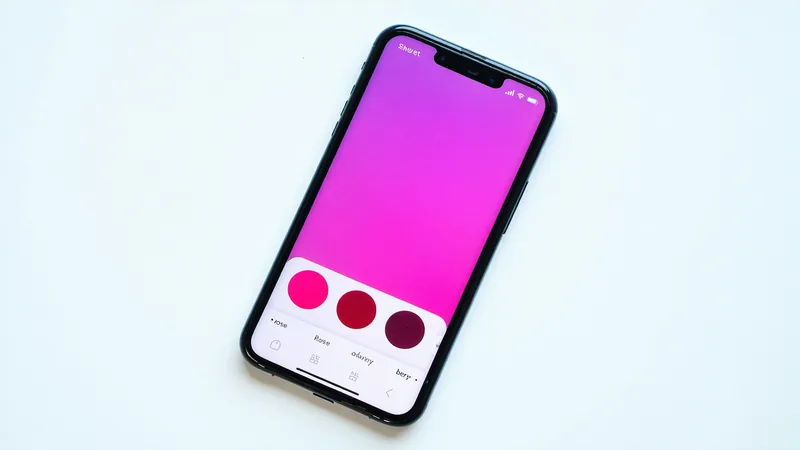
The conversion lift from AR try-on on beauty product pages is real, measurable, and well-documented enough at this point that the question has shifted from "does it work?" to "why does it work, and how do you measure it correctly?" This piece addresses both.
Understanding the mechanism matters because it determines how you set up the test, what you measure, and whether you're measuring the right thing. Brands that have measured AR try-on conversion incorrectly — typically by looking at site-wide conversion before and after launch — have sometimes reached skeptical conclusions that don't hold up when the methodology is tightened.
The baseline: what typical beauty PDP conversion looks like
Product detail page conversion rates in beauty e-commerce vary by category and brand maturity, but a reasonable working baseline for an indie to mid-market color cosmetics DTC brand is 3–5% add-to-cart rate on a standard PDP. This is across all sessions — including sessions where the visitor was browsing, not purchasing. For visitors who arrived via a paid shade-specific search, the number can be higher, in the 6–8% range. For organic browse sessions, it often sits below 3%.
What AR try-on does to that number — when measured correctly — is documented across multiple industry analyses and brand case studies: the add-to-cart rate on try-on-engaged sessions (sessions where the shopper actually activated the camera and rendered at least one shade) tends to run 8–12% or higher. That's a 2–3× lift over the baseline on those specific sessions.
The critical phrase is "try-on-engaged sessions." This is where methodology matters enormously.
How to structure the test so the number is trustworthy
The most common mistake in measuring AR try-on conversion lift is comparing overall site conversion before and after launching try-on. This conflates too many variables — seasonal changes, new product launches, changes in traffic source mix — to yield a clean signal. A meaningfully better test design is a concurrent A/B structure on the product page itself.
The setup: randomly split visitors to a target PDP into two groups. Group A sees the standard product page with photography and shade swatches. Group B sees the same page with an active try-on widget. Measure add-to-cart rate for both groups over a period long enough to reach statistical significance — typically two to four weeks for a brand with meaningful traffic, longer for lower-traffic brands. Sample size matters: at 3% baseline conversion, you need several thousand sessions per variant to detect a 1-percentage-point lift with confidence.
What you'll see in a well-run test is a lift on Group B's add-to-cart rate overall — because simply having the try-on option on the page changes the browsing behavior of visitors who don't necessarily activate it. And within Group B, the subset of sessions where try-on was actively engaged will show a substantially higher conversion rate than the control group.
A synthetic scenario to make this concrete: an indie lip brand running this test on their best-selling lipstick range across 60 shades, over three weeks, found that Group B (try-on enabled) converted at 6.1% add-to-cart versus Group A's 4.2%. Within Group B, sessions where the try-on was used for more than 15 seconds converted at 10.8%. The signal was cleanest on their darkest shades — Fitzpatrick Type V–VI optimized shades — where uncertainty is highest and the confidence lift from try-on is most pronounced.
Why engaged sessions convert at a higher rate: the mechanism
The conversion lift from try-on isn't magic. It has a clear behavioral mechanism: try-on reduces purchase uncertainty, and purchase uncertainty is the primary reason a visitor who is interested in a product doesn't add it to cart.
In beauty, uncertainty has two specific dimensions. The first is shade fit — will this color look right on my skin? The second is finish expectation — will the matte actually be as matte as it looks in the photo, or will it be more of a satin? Try-on addresses the first dimension directly. For complexion products — foundation, concealer, blush — it also begins to address the second, because a good rendering engine distinguishes between finish types visually.
There's also a time-on-page effect worth noting. Sessions that include try-on engagement tend to have significantly higher time-on-page, which correlates with purchase intent. A shopper spending 45 seconds cycling through lip shades on the camera is deeply engaged with that product — far more so than someone who scrolled through the shade grid and bounced. That behavioral signal is also available as an analytics data point for brands who want to use session data to tune product strategy.
The cart value dimension
Conversion rate is the most commonly cited metric, but average order value is where the economics can get interesting. Brands with wide shade ranges have reported that try-on sessions are associated with higher multi-shade adds — a shopper who used try-on to confirm their primary shade of interest sometimes ends up adding a second complementary shade in the same session. The certainty provided by one successful try-on appears to reduce friction on the adjacent purchase decision.
We're not claiming this is a universal effect — it varies significantly by product category and how the PDP is structured around the try-on experience. But it's a dimension worth measuring in your own A/B test, not just add-to-cart rate in isolation.
What doesn't move the needle: common misconceptions
Try-on doesn't lift conversion for products where shade fit isn't the primary uncertainty. A mascara or a setting spray isn't shade-dependent — try-on adds a gimmick, not a confidence signal. The conversion lift from AR is concentrated in products where color-on-skin is the central purchase question: lip color, foundation, blush, bronzer, eyeshadow, and concealer are the clear use cases.
Try-on also doesn't compensate for a bad product page experience. If the page is slow, the shade naming is confusing, or the photography is inconsistent, adding a try-on widget creates complexity without the context to interpret it. The conversion lift from try-on is highest when the rest of the PDP — product description, shade naming, finish labeling — is already doing its job well. Think of try-on as a confidence amplifier for a page that is already persuasive, not a repair for one that isn't.
Session volume and the traffic threshold question
One practical consideration for brands evaluating try-on: the conversion lift is only monetizable at a sufficient session volume to cover the platform cost. For a brand doing under 3,000 product page sessions per month on a given SKU, the lift may be real but the absolute revenue impact may not justify the platform cost unless aggregated across a wide shade range.
The math gets more favorable quickly as session volume grows. A brand with 20,000 monthly sessions on their complexion range, converting at 4% baseline, who lifts to 6% through try-on, is generating roughly 400 additional add-to-cart events per month — at an average order value of, say, $35, that's $14,000 in incremental monthly revenue from a platform costing a fraction of that. At that session volume and conversion delta, try-on is one of the highest-ROI digital investments available to a beauty brand.
The starting point is measuring what you actually have. Before adding any try-on layer, establish your current PDP conversion rate per-product, not as a site average. That baseline is the number you're trying to move — and the test design that follows from it is the thing that will tell you whether it's working.